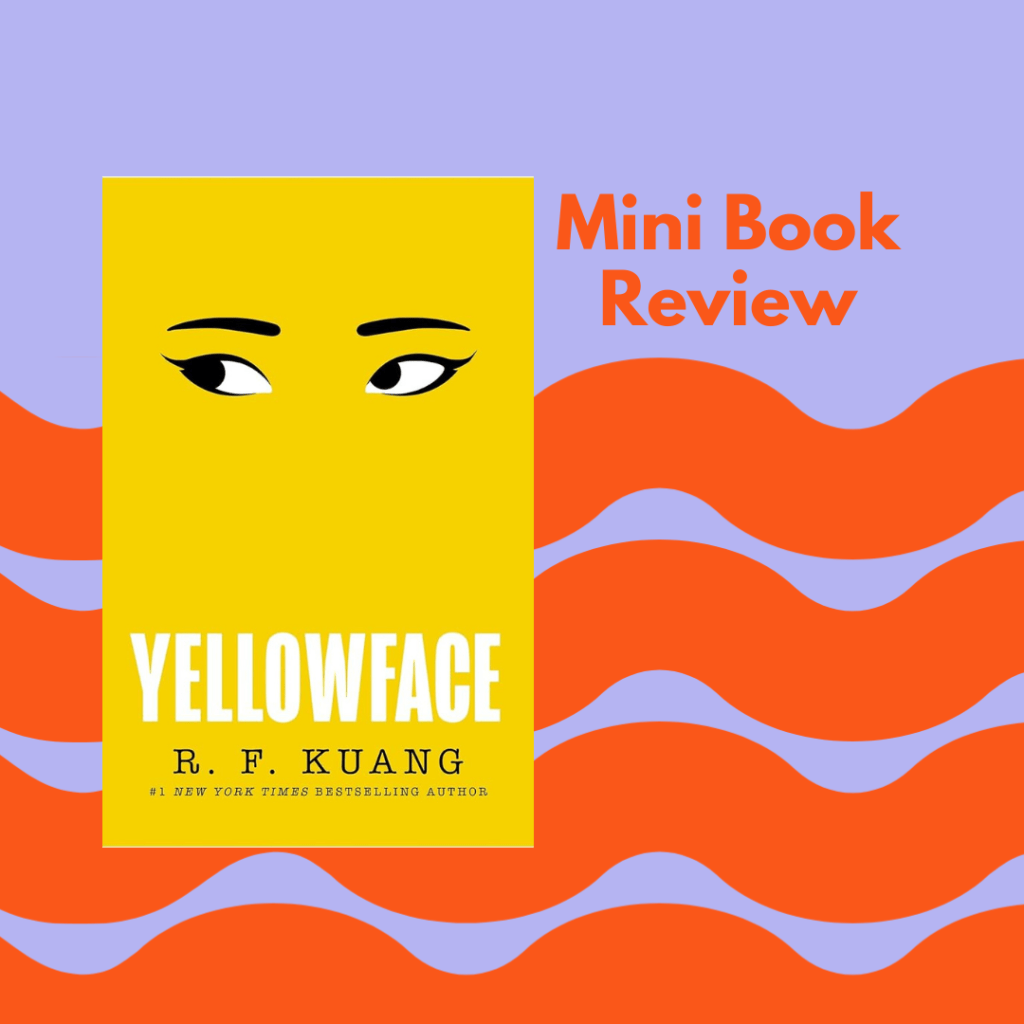
Goodreads Synopsis – Authors June Hayward and Athena Liu were supposed to be twin rising stars. But Athena’s a literary darling. June Hayward is literally nobody. Who wants stories about basic white girls, June thinks.
So when June witnesses Athena’s death in a freak accident, she acts on impulse: she steals Athena’s just-finished masterpiece, an experimental novel about the unsung contributions of Chinese laborers during World War I.
So what if June edits Athena’s novel and sends it to her agent as her own work? So what if she lets her new publisher rebrand her as Juniper Song—complete with an ambiguously ethnic author photo? Doesn’t this piece of history deserve to be told, whoever the teller? That’s what June claims, and the New York Times bestseller list seems to agree.
But June can’t get away from Athena’s shadow, and emerging evidence threatens to bring June’s (stolen) success down around her. As June races to protect her secret, she discovers exactly how far she will go to keep what she thinks she deserves.
I really liked this book. I think June is a really interesting character and I think she really carried this novel. I find her thought process to be fascinating and her fall from grace to be very satisfying. June is a horrible person, but the character is written so well that I wanted to see what she would do next.
I think much of the discourse around this book pertains to its commentary, and how shallow much of felt. I’m not really in a position to speak to the validity of the satire and criticism, but much of the book felt like a Erasure Percival Everett. I think both of these books are different in their delivery and message, but to me at least, they work as excellent foils to each other and the satire in both of these novels work for me and their discussions on race and how society reviews “diverse books” is very important, especially in today climate.
I think that R.F. Kuang wrote a book from her perspective and how she sees social media and book reviews. It felt like an honest books written about things that she cares and thinks often about. Despite the criticism thrown at Twitter discourse and its apparent vapidness, I think that this book was written with curtsy and from a good place. At no point did this book feel like it was against Twitter or Goodreads, rather rightfully criticizing the bandwagon nature of social media and its often flash in a pan mentality to literary criticism and who it should be directed at.

 Rebecca's Thoughts
Leave a reply to Delaney Cancel reply