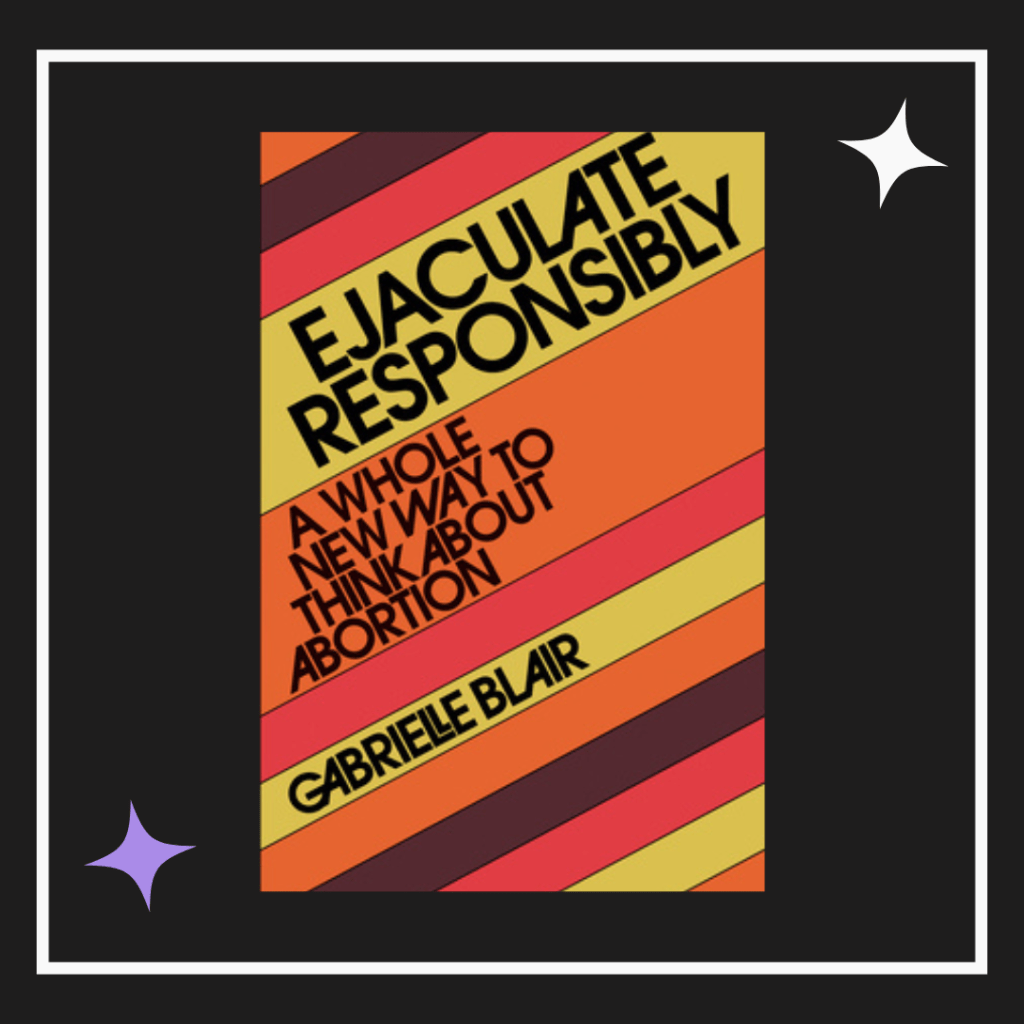
Goodreads Synopsis: In Ejaculate Responsibly, Gabrielle Blair offers a provocative reframing of the abortion issue in post-Roe America. In a series of 28 brief arguments, she deftly makes the case for moving the abortion debate away from controlling and legislating women’s bodies and instead directs the focus on men’s lack of accountability in preventing unwanted pregnancies.
Highly readable, accessible, funny, and unflinching, Blair builds her argument by walking readers through the basics of fertility (men are 50 times more fertile than woman), the unfair burden placed on
women when it comes to preventing pregnancy (90% of the birth control market is for women), the wrongheaded stigmas around birth control for men (condoms make sex less pleasurable, vasectomies are scary and emasculating), and the counterintuitive reality that men, who are fertile 100% of the time, take little to no responsibility for preventing pregnancy.
The result is a compelling and convincing case for placing the responsibility—and burden—of preventing unwanted pregnancies away from women and onto men.
I think that this book is a really interesting addition to the conversation around abortion and birth control. It’s a very short book but it still takes it time explaining and reasoning about the role of men in reproduction and how they should take a larger role in birth control and contraception. It is also a book with many shortfalls, it approached reproduction from a narrow cis-gendered, heterosexual, white perspective and although I think there is room for more discussion outside of this, I think the author was really only prepared and comfortable to write about this topic from a perspective that she is the most familiar and educated from. I don’t think this is inherently a bad thing, but I do think that similar conversations from varying perspectives could make this argument more inclusive and powerful. Additionally, I’m not sure I agree with every conversation happening in the book.
I respect what it is trying to do, and did enjoy looking at her perspective and views on the topic. I think this book, coming from a religious author, is important and introduces this idea to people who way be skeptical or closed off from conversations around the topic of reproduction. I don’t think this book is trying to be revolutionary with it’s ideas, rather I think that it is trying to present reproduction rights in a more presentable and accessible way to people new to this conversation. At the same time however, I think that many of the ideas presented in this book are different that the normal line of thoughts typically seen around contraception. With all of this being said, I think this book works well as a supplement to books about reproduction and shouldn’t be read in a vacuum.
At the end of the day I really enjoyed reading this book and found much of what is said to be interesting and straightforward. I think it is a great introduction to reproduction rights and works as an interesting perspective on abortion and contraception.


 Rebecca's Thoughts
Leave a comment