In 2011 Archie Comics Publications, Inc. ended their relationship with the Comics Code Authority’s (CCA) seal of approval. This marked the end of a 50-year-old program designed to weed out “dangerous” ideas in comic books and try and save the children (or something like that). Archie Comics was one of the last two companies to continuously abide by these self-regulated rules and with them straying away from the seal, the seal did what it did to many small publishing companies before, it perished. The CCA’s comic seal was a form of self-imposed, self-censorship that ensured the comics’ contents weren’t going to violate the minds of the young and vulnerable. Although the seal didn’t really mean anything and was ‘optional,’ it was used consistently by advertisers to make sure that the comics they were advertising in were safe from nefarious things and abided by what could be considered ‘family friendly content.’ It was a time of McCarthyism and programs like the Hays Code sought to rid popular media of sex, violence, profanity, and contrary political ideas. The CCA’s seal was created to act like the Hays Code of comic books with many types of content being targeted. Both of these programs were created between 1930 and 1960 and a couple of decades later in 1985, The Parent Music Research Center (PMRC) was founded to eliminate many of the same ideas from the music industry. Although a topic for another day, all three of these systems work under the idea that you must abide by the rules or struggle to survive.
Publish or perish is an academic phrase coined to express the demand academics have to publish work in journals. It’s derived from the idea that academics have to constantly publish their work to gain the funding and clout needed to continue research. It’s a cycle that prioritizes publishing over other academic activities like research and teaching. The notion is often critiqued for contributing to a variety of issues like replication of ideas and topics, quantity over quality of research, ethics abuses, and gendered inequalities within published journals. There are really only two options when it comes to this mentality, you publish tons of articles and succeed, or publish few and run the risk of losing everything and essentially perishing.
I am somewhat co-opting the phrase “publish or perish” from academia but I think the idea of publishing under the CCA seal has similar intent and repercussions to that in the academic context. Companies were forced to comply with the restrictions and guidelines or miss out on ad revenue (as previously mentioned), and distribution as many distributors only wanted comics with the seal on them. This led to the downfall and closure of many smaller presses who refused to abide by the guidelines as they weren’t making any money. These companies had two choices, published under the guidelines set by the CCA or run your company into the ground. Many companies could not afford to disobey the CCA and because of that, they had very little leverage when it came to fighting back against the system.
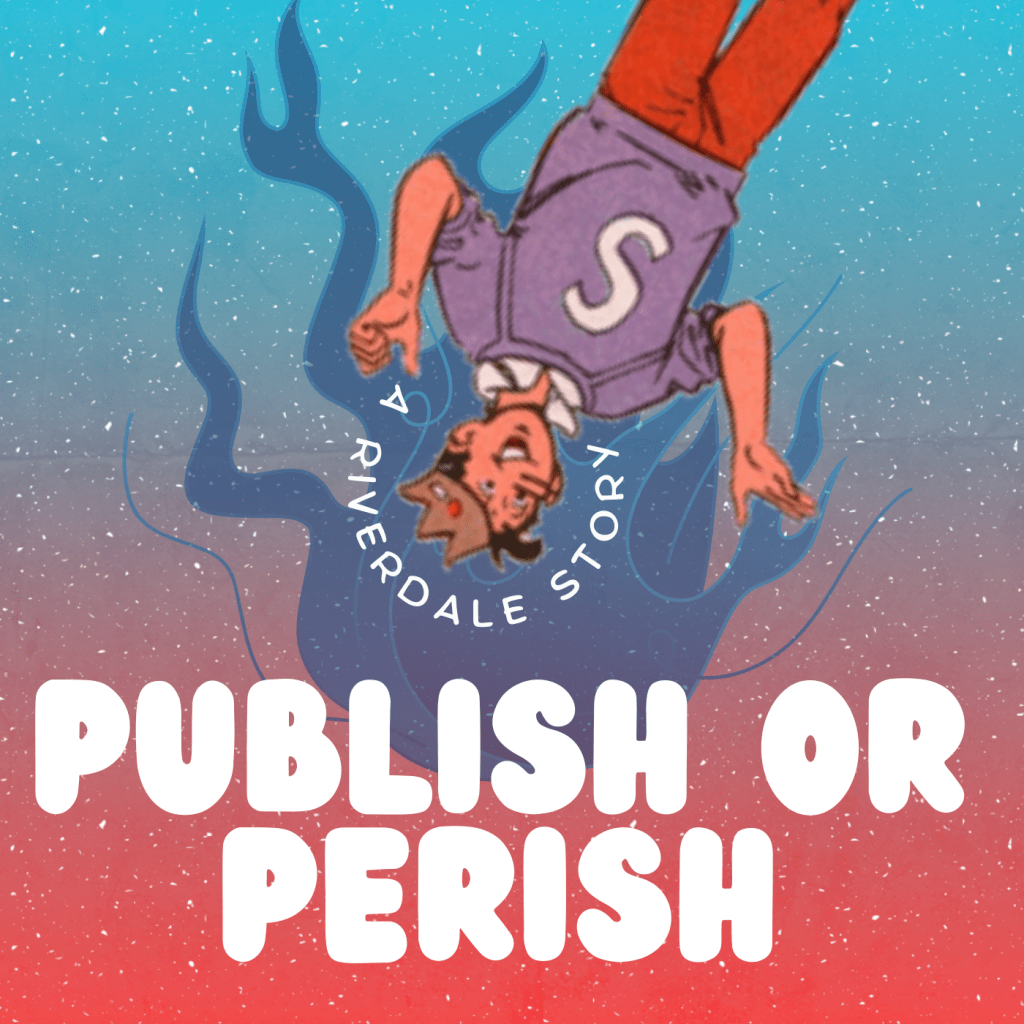
One of the many plots on season 7 of Riverdale revolves around Pep Comics and their battle with the “Tribunal” a group of concerned Riverdalians who see the influence of Pep Comics as destroying the minds of Riverdale’s youth. The group is comprised of Dr. Werthers, Principal Featherhead, Mayor Blossom, and Sister Woodhouse whose influences are so powerful, that their rules imposed upon Pep Comics have spread nationally with vendors across America pulling the comic from their stands. Many of the things the “Tribunal” wants to rid of align more with the rules set forth by the real-life PMRC, but I think the connection between the CCA, and the “Tribunal” is obvious. In Riverdale, the “Tribunal” has its sights set on the occult, violence, and pornography as being the things that are tarnishing the community and children living in it. It is then implied (and proven) in the show that the reason for the “Tribunal” was ultimately a cover-up to hide the truth surrounding the murders that had happened throughout the season. I’d try to explain the various plot points that got us here, but explaining the nuances and plot points of the show is a task too great for the likes of me.
Exhibit A:
There’s a killer called the Milk Man, and he killed Ray Bradberry, Ethel Muggs parents, and other people (???). All these people had connections to the Blossom palladium mine, another ploy to blow up the world with a new atomic weapon. [ Have fun deciphering that!🙃]
I think the main message to take away from all that nonsense is that the people with the power were using the guise of nuclear war (the season happened in the 1950s) to further an agenda and influence the youth into thinking a certain way. They wanted to create a mass hysteria around Pep Comics and use them to further their agendas. They were hiding the real horrors of the world by targeting the fake ones.
This isn’t the first time the show has addressed real-life panics like this, Gryphons and Gargoyles, a copyright-friendly Dungeons and Dragons, was introduced in season 3 of the show and mirrored much of the “Satanic Panic” surrounding the real-life version of the game. The main difference between D&D and G&G is that the demons were real in Gryphons and Gargoyles and the concerned parents were proven correct. I always thought that the notion that the demons and monsters were real was somewhat of a cop-out on behalf of the show. I think that many of the forces behind McCarthyism, the Hays Code, the CCA, and the Satanic Panic were using fear as a tool to censor, marginalize, and silence groups of people. These moral panics aren’t designed to be inclusive and safe spaces, they were designed to exert power onto people who are vulnerable and who can’t do anything else but accept. I think this article shows a good depiction of the real ramifications of the panic and how it impacted people with mental health issues. This makes the idea of the monsters in Riverdale being real seem interesting in the context of the show. Many of the adults in Riverdale are objectively bad people, this is especially true when it comes to parental figures in the show. They all tend to be a particular kind of bad, and the fact they were proven right through this plot point is odd and mostly contrary to the rest of the show. Why should the adults be right in a show where they are so consistently wrong. This is why the idea of Pep Comics, the symbol of youth rebellion in this season, shutting its doors after not complying with the rules of the “Tribunal” is such a weird move. The main question I have is why? Why did Pep Comics have to close, and why did they close under the pressure of objectively wrong people?
The episode in question ended with most of the people in charge of the “Tribunal” either being arrested or chased out of the town. So why does Pep Comics still have to close, and why did they perish under the whims of a broken system? I think an easy answer could be laziness or a lack of direction on the part of the showrunners, but as true as that may be, it’s not the most satisfying nor is it the most interesting. I think a lot of the answers to my questions can be found in the final episode of the series and the idea that none of the characters in the show were particularly happy. The ending of the show was kind of miserable, and if I am being honest, it appeared to be a bunch of unhappy people pretending to be happy for the sake of a good ending. Again, I think that much of this can be blamed on the showrunners, but it was also just a very normal ending to an otherwise not normal show. Riverdale is notorious for being a show that is spontaneous and for lack of a better word crazy. Like, nothing in the show makes any sense yet it is still incredibly on-brand and doesn’t feel out of place. I had a running joke that the only way to end the show would be in nuclear armageddon, and I still stand by that. The only way to tie up all the loose ends and give a proper ending to the show would be to have everything blow up. Would that be the most satisfying? Probably not, but it would be distinctly Riverdale and I think that is what matters the most.
For a large portion of the final episode, everyone is miserable. It’s the end of an era and people are realizing that life isn’t high school anymore. Again, I think this is a relatively normal sentiment, but the show has never been about high school, nor the epic highs and lows of high school football, it’s been about wacky things happening to weirdo people. High school was merely the setting and the place for things to happen. Additionally, a large part of the show also happened outside of high school, like they graduated two seasons ago, and only returned to high school because of a fluke and time travel. And let’s face it, even when they were in high school, they still acted like they were in university. I think that this fixation on high school also plays into the idea of the adults being the true villains of the show. In high school, kids are pretty much at the whims of the teachers, administrators, and parents. I think using the setting and people as a means of furthering the plot makes Pep Comic closing just a byproduct of the environment they are in. It has less to do with the people and more to do with the environment that it exists in. It wasn’t the “Tribunal” that closed Pep Comics it was Riverdale and the environment that it exists in.
In 1954 people were scared. They didn’t know what they were scared of but the people in positions of authority told them that they should be fearful. Youth delinquency was up, the nuclear family was falling apart, war and mutual destruction seemed imminent, and life was unsure for many Americans. In reality, many of these fears were largely fabricated and exaggerated. Fear was used to further an agenda and twist the public’s perception of reality. Sound familiar?
I think Riverdale’s use of the CCA was smart and set an environment that was not as it seemed. I’m probably giving the show too much credit or looking too much into it that I have gone full circle, but I think that’s beside the point. The show is over, and there is nothing more that it has to say. The people of Riverdale are stuck there forever and the only way to escape is to accept the environment in which the town exists. People may grow up, but the town stays the same. The characters are resigned to the fact that despite their best efforts the culture of a town never changes. That means accepting the environment created by the adults, closing Pep Comics, and becoming resigned to the fact that despite their best efforts some things are bound to perish.
Here are some articles that helped with the creation of this post!
A LOOK INTO THE HISTORY OF THE COMICS CODE AUTHORITY
The insane history of how American paranoia ruined and censored comic books

 Rebecca's Thoughts
Leave a comment